
Features
Water
Refraction, murky water, caustics, ocean, currents, boat wakes, white water, rivers and waterfalls, shore waves, camera under water.

Refraction off, then on: the posts shift at the surface and the floor darkens with depth.
- Refraction (
rendering/pathtracing/refraction): water and glass blocks bend light by their IOR, with total internal reflection and depth tint; glTFKHR_materials_volume,KHR_materials_ior. - Murky water (same setting): scattering media;
IOR,ABSORPTIONandSCATTERINGin shaders; glTFKHR_materials_scatterdraft. - Caustics (
rendering/pathtracing/caustics): sunlight lines under rippled water. - Caustic cascades (
rendering/pathtracing/caustics_cascades): sun caustics out to 256 m, near lines unchanged. - Path-traced ocean (
PhysXWaterSurface3D:pathtraced_absorption,pathtraced_scattering,pathtraced_roughness): waves refract, tint and scatter, with caustics on the seabed. - Ocean swell (
wave_cascades): up to four wave layers give long swell under the chop without visible tiling, whitecaps where they add up, on a shallow-water (TMA) spectrum; setdepthto the real depth for open sea (the 3 m default damps long waves). - Measured wave spreading (
wave_spreading,swell): Donelan-Banner spreading as Horvath (2015) fits it, with swell; slopes at 14 m/s match Cox and Munk’s measurements. - Raster reflections (
raster_reflectionson PhysXWaterSurface3D and PhysXRiver3D): raster sea and rivers reflect the sky and the sun’s glitter by the exact Fresnel term, matching the path tracer; raster waterfalls, white water, sea foam and wet sand take the scene’s shadows, sky light and cloud shadows. - Lake ripples (automatic from
fetch): on short fetches the wave grid gets finer, up to 256 points, so lakes keep their short wind ripples and sun glitter; open sea is unchanged. - Whitecaps by wind speed (
whitecap_auto, on;whitecap_cover_scale): whitecap cover follows the wind speed as measured at sea (Monahan 1980), whatever the wave settings. - Finer water mesh up close (
mesh_detail). - Shore waves (
shore_waves): swell turns with the seabed, grows in the shallows, breaks and runs up the sand (Stockdon run-up). - Wave groups (
shore_wave_groups): shore waves arrive in sets with their own Rayleigh heights, so each breaks at its own place. - Plunging breakers (
shore_wave_curl,shore_spray,shore_spray_amount): the crest throws a sheet of water that lands ahead and sinks into the bore, with spray where it is thin and where it lands. - Currents (
current,flow_period): flow round rocks and along shores carries waves, foam and floating objects. - Faster flow bakes (
physics/physx_3d/water/multigrid_flow): multigrid-preconditioned conjugate gradients bake the flow 7 to 10 times faster than SOR. - Live flow (
live_flow,wall_friction): near the player, rocks and banks shed wakes and eddies. - Boat wakes (
PhysXWaterWake3D.dispersive,breaking_slope): waves stepped with deep-water dispersion in Fourier space form the Kelvin pattern, a 19.5 degree wedge of transverse and diverging waves. - White water (
flow_foam): foam in fast water, trailing rocks and drifting downstream. - Rivers (
PhysXRiver3D:discharge,roughness,max_slope): drawn as a curve; finds its depth and never runs uphill.- Cascades into white water;
carveemits channel brushes for a terrain deformer. - Rocks part the current and trail foam (
obstacle_collision_mask); near the camera they shed eddies and a swinging wake (live_flow). - Joins lakes, the sea and other rivers (
mouth_target), ponding to the water level; tributaries add their flow. - Waterfalls (
fall_min_height): a falling sheet that thins, whitens and breaks up, with a boiling pool and spray. - Waterfall mist (
fall_mist_amount,PhysXWaterMist3D): a simulated mist grid per fall, drawn as a raster FogVolume and path traced. - Living waterline (
edge_lap_height,edge_relief,edge_foam): edges lap with the flow, look ragged and carry a thin foam band.
- Cascades into white water;
- Camera under water (path traced automatically; raster with
underwater_enabled): fog, scattering, Snell’s window, image split at the water line.
Images#

Murky water: a green glow fills the deep end.
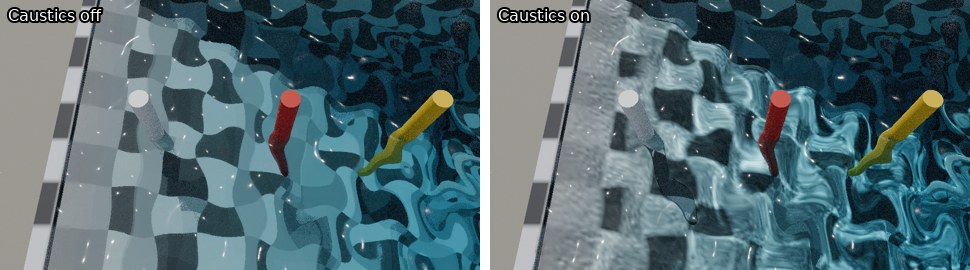
Caustics: bright lines on the pool floor.
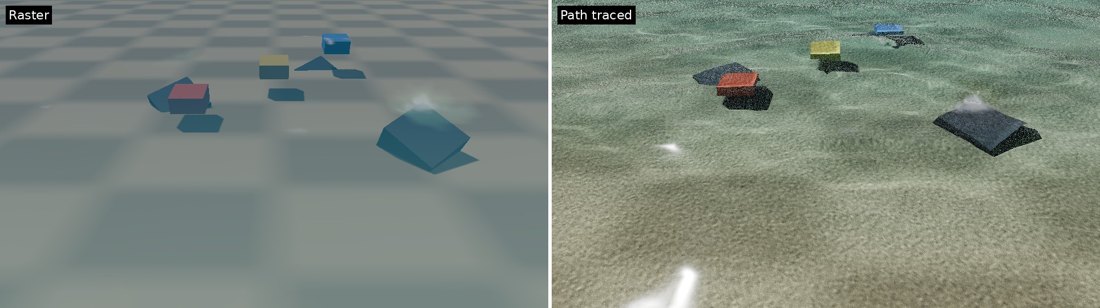
Ocean: sand and caustic light through the water.
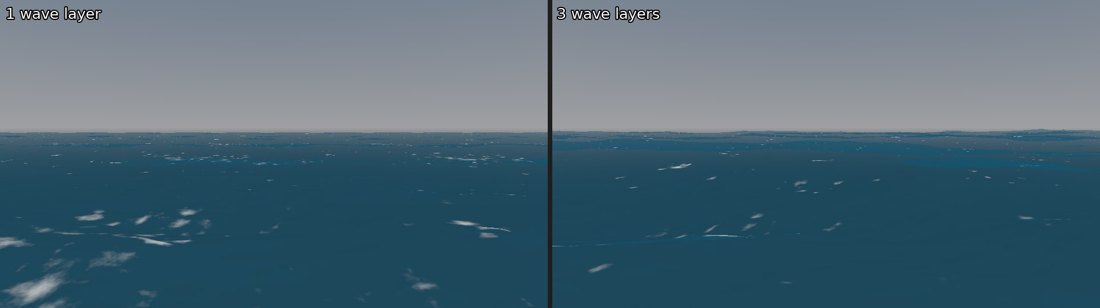
Ocean swell: one layer repeats the same foam patches; three layers add long swell.
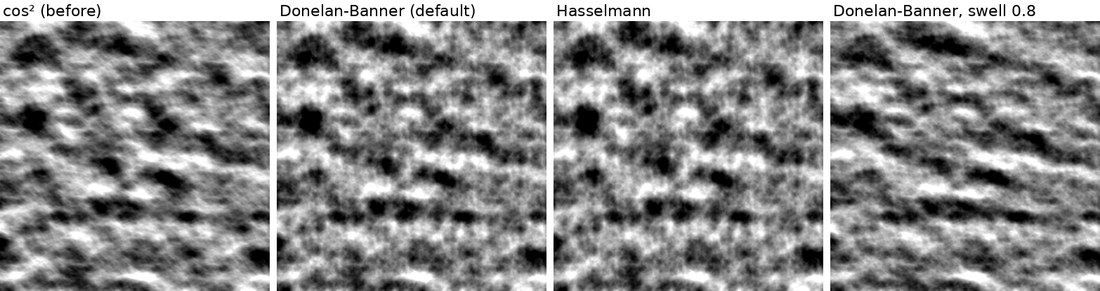
Wave spreading: cos² gave long parallel crests; the measured spreading breaks them up, and swell adds long crests back.
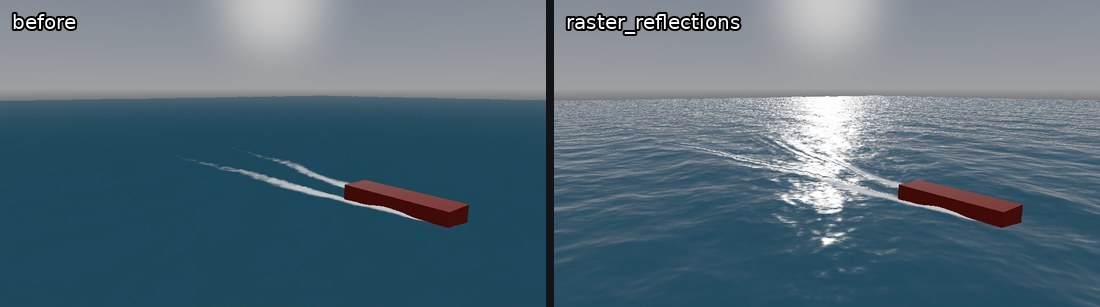
Raster reflections: the flat dark sea now shows the sky and a band of sun glitter.
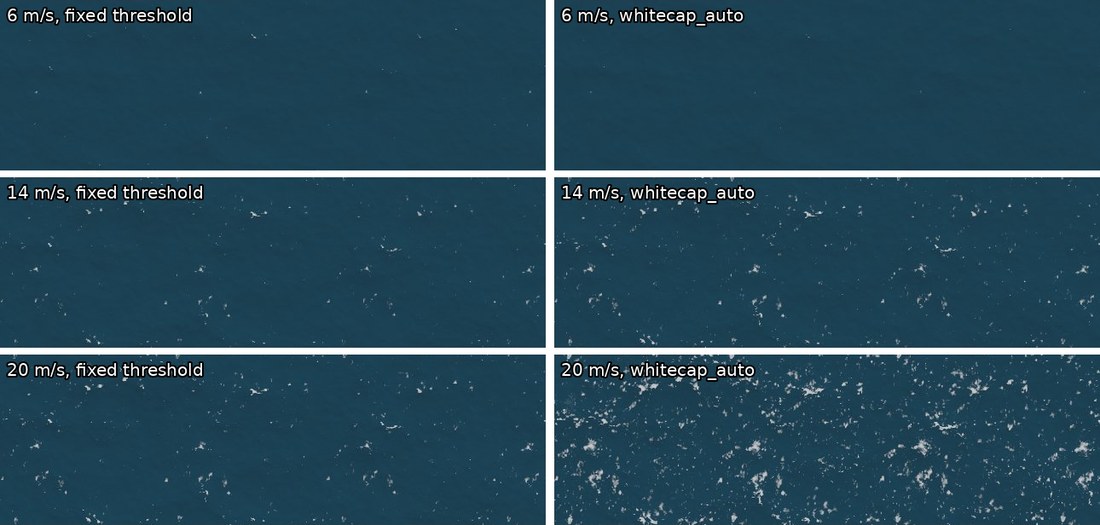
Whitecaps: with a fixed threshold the cover barely changes with the wind; now it grows from none at 6 m/s to many at 20 m/s.
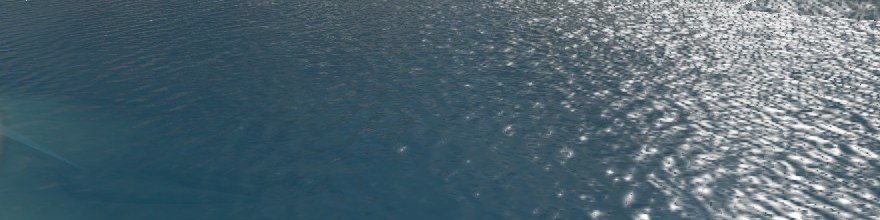
Lake ripples: short wind waves and sun glitter on a lake, where the surface used to lie flat.
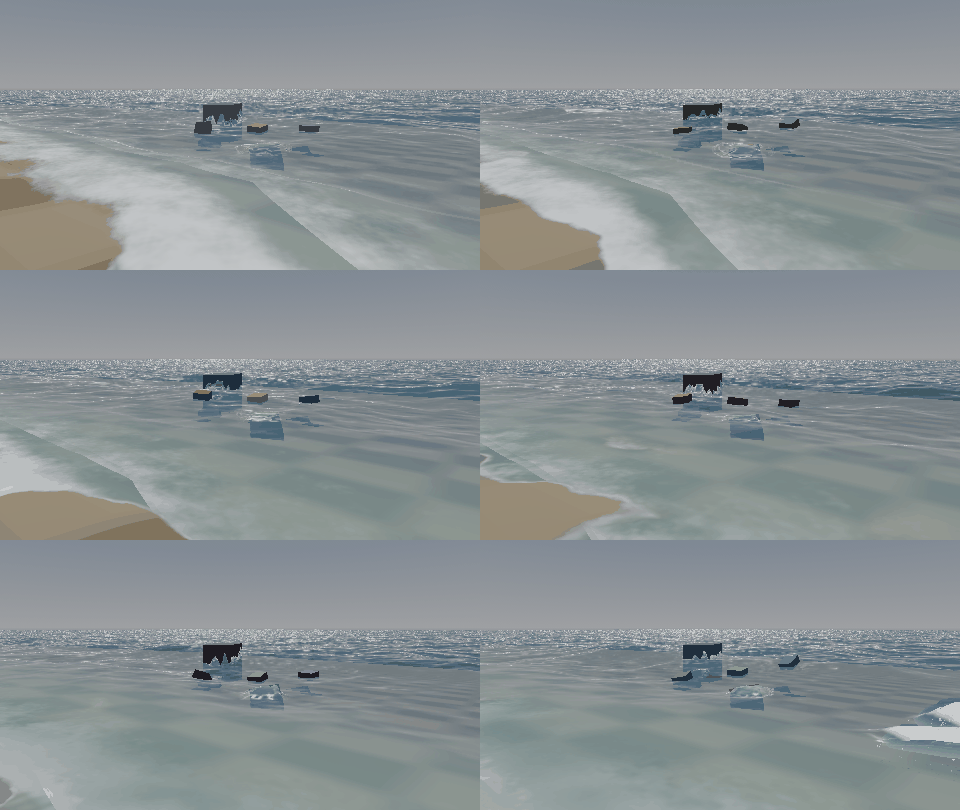
Shore waves: swell breaks into foam on the beach.
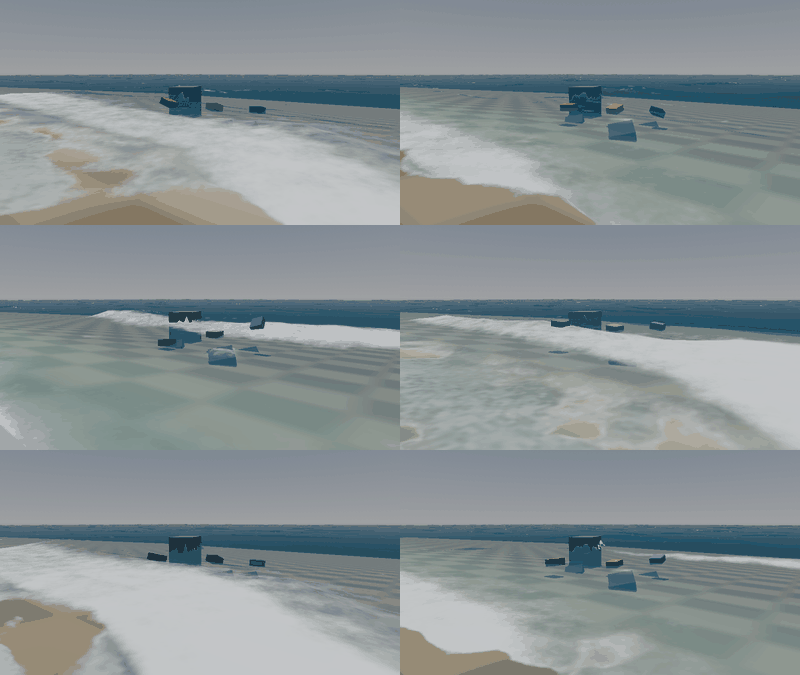
Run-up: the wash climbs the sand and drains back.
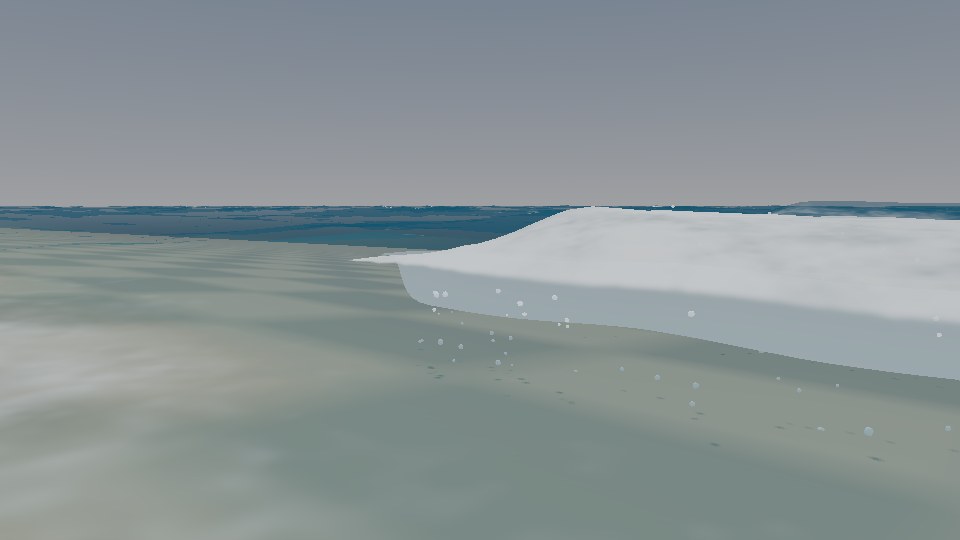
Plunging breakers: the sheet thrown off the crest, with spray along its thin edge.
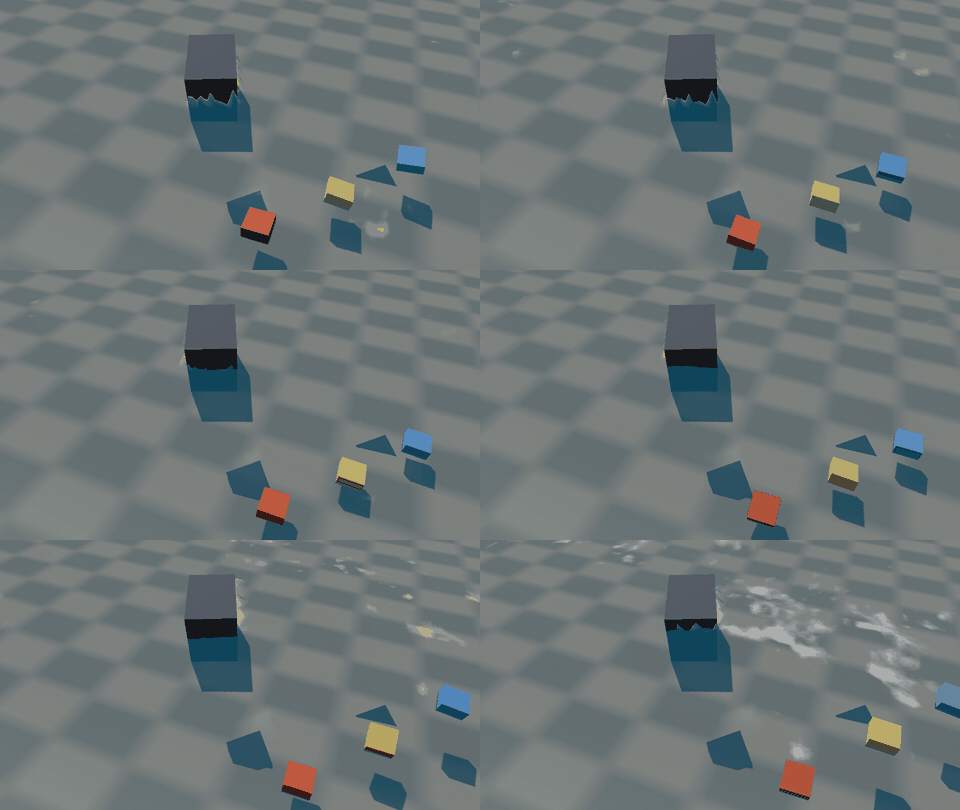
Currents: the boxes drift past the rock.
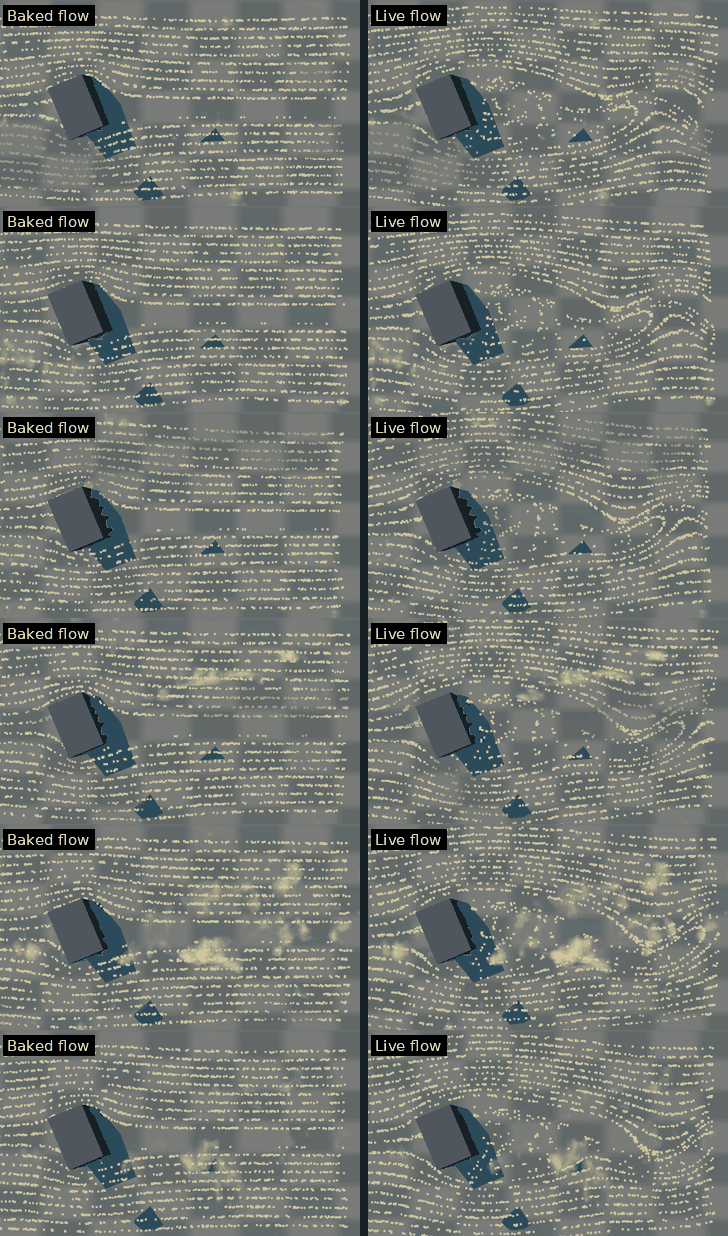
Live flow: the streaks roll up into a wake behind the rock.
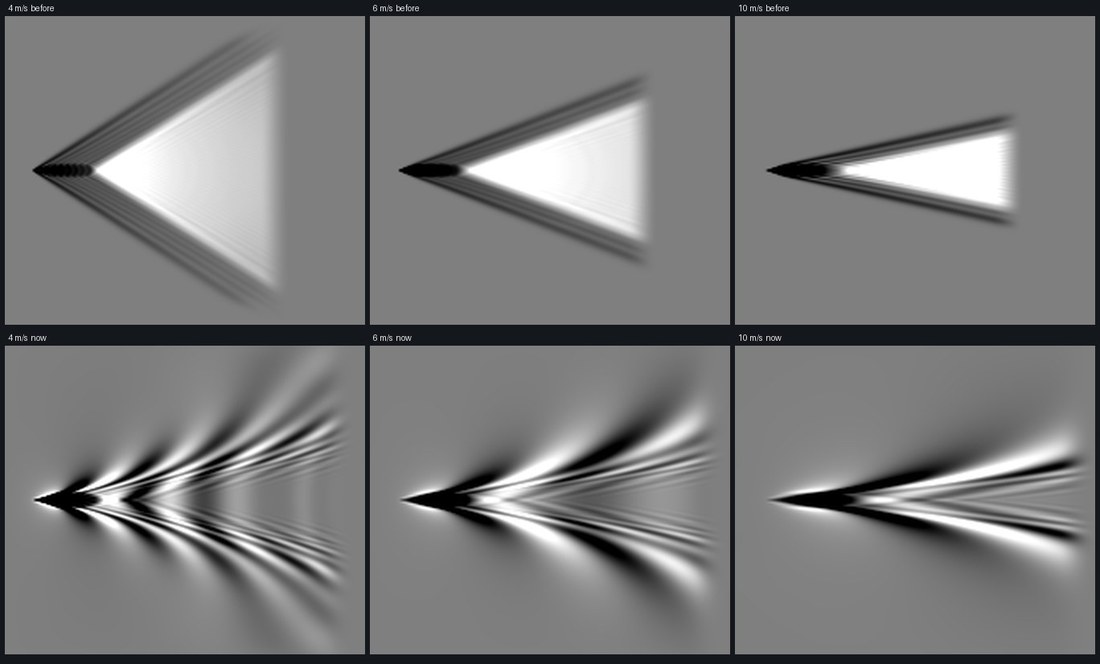
Boat wakes: before, a flat wedge; now transverse and diverging waves form the Kelvin pattern.
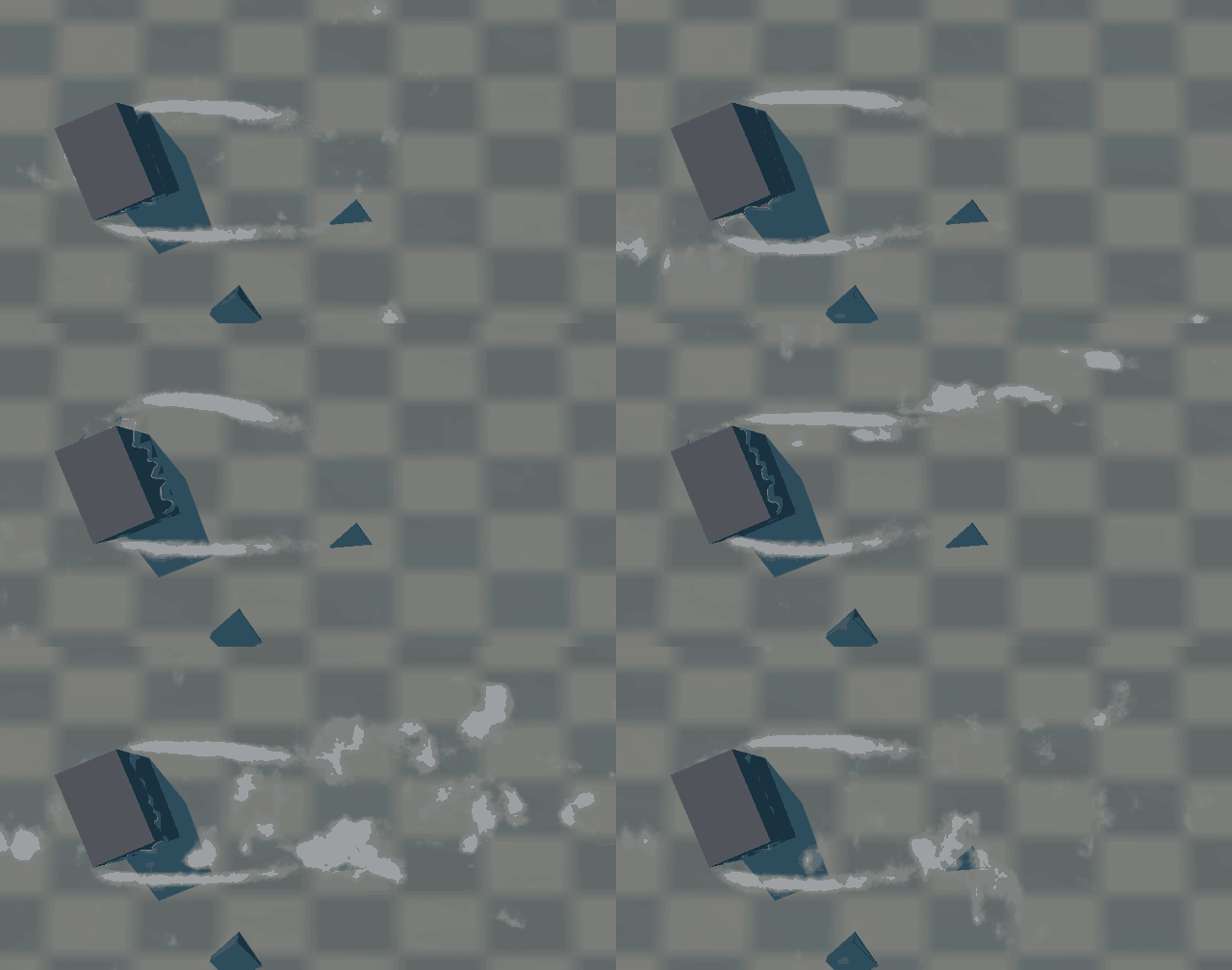
White water: foam peels off both sides of the rock.
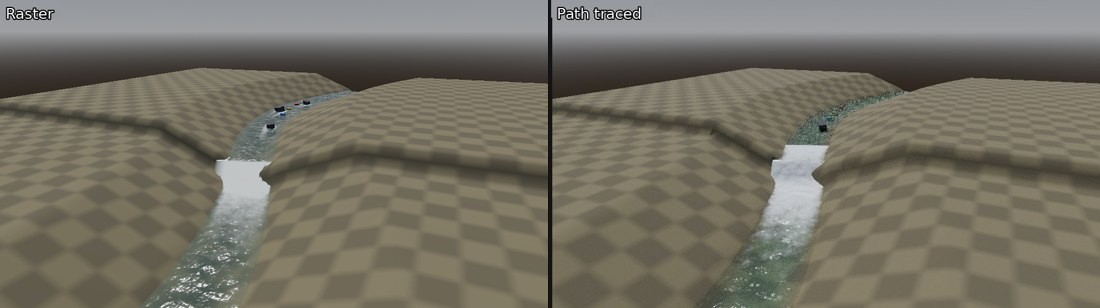
Rivers: the cascade and the white water below it.
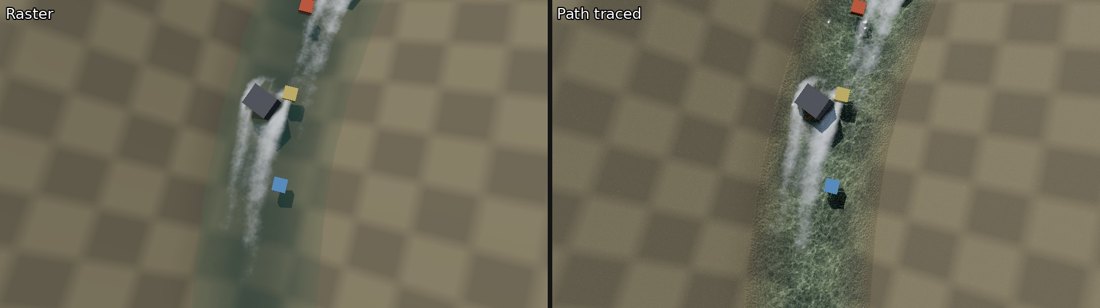
Rivers round rocks: foam trails behind the rock.
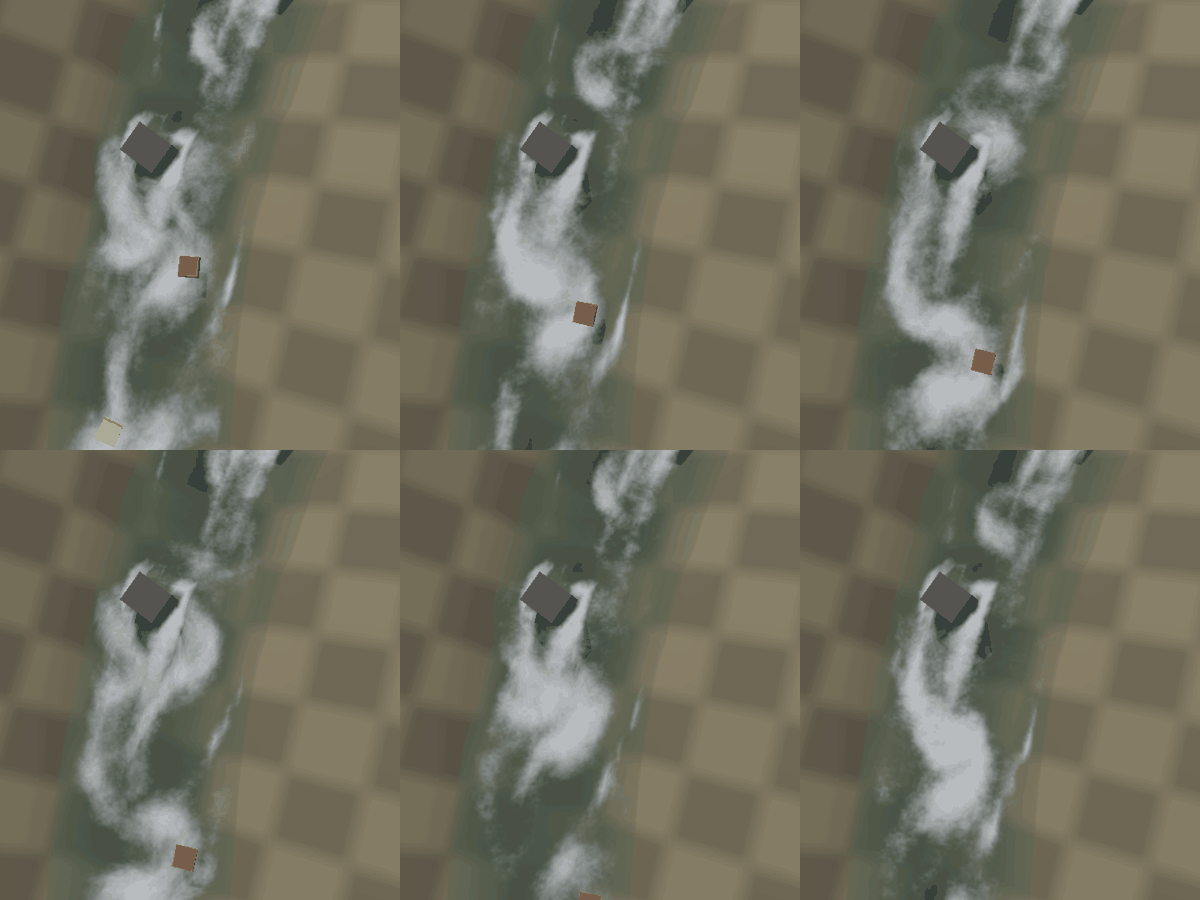
River live flow: the wake swings behind the rock.
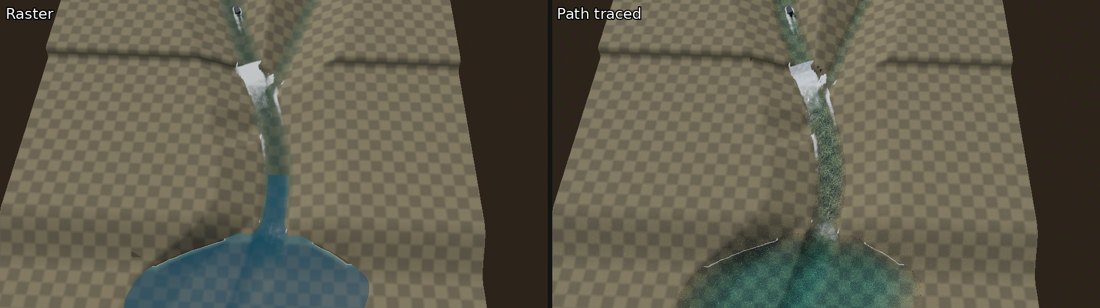
River joins: two streams merge and spread into the lake.
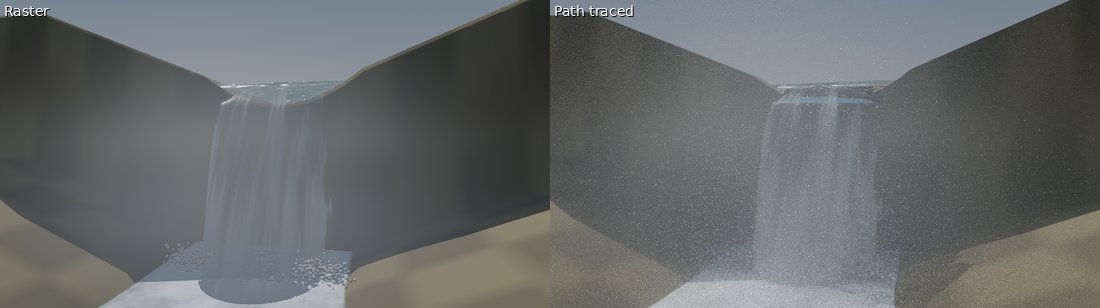
Waterfall: the sheet breaks up into white water above the pool.
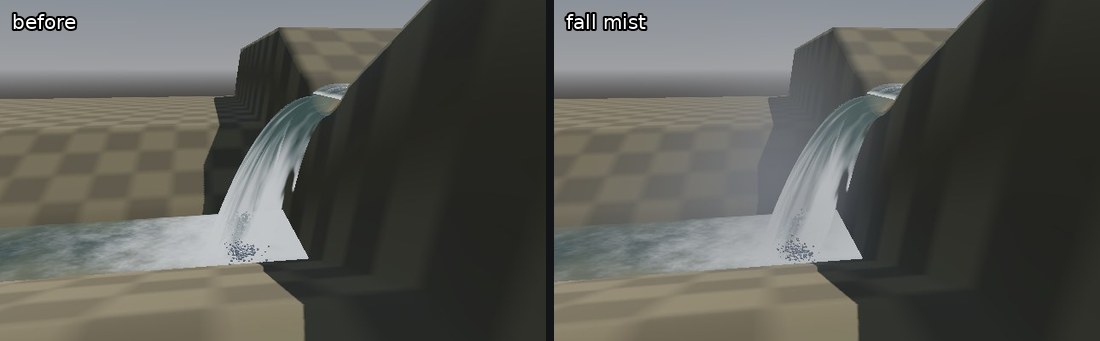
Waterfall mist: a haze now rises from the pool and drifts past the fall.
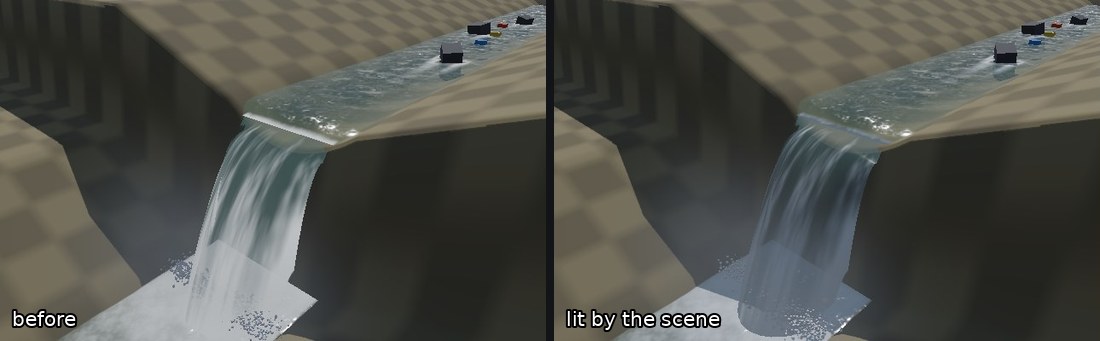
Waterfall lighting: the raster fall no longer glows white in the shade of the gorge.
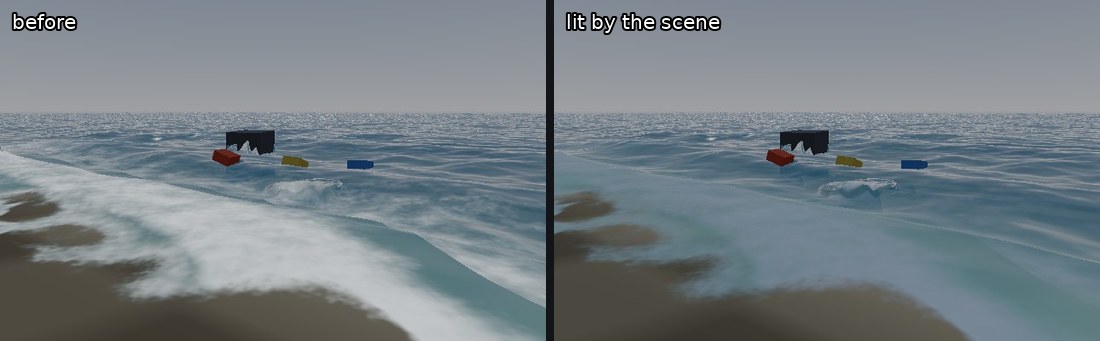
Foam lighting: shore foam in shade is no longer bright white.
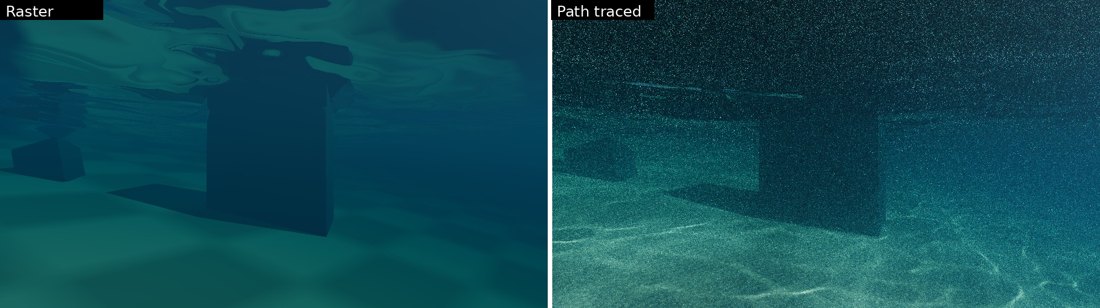
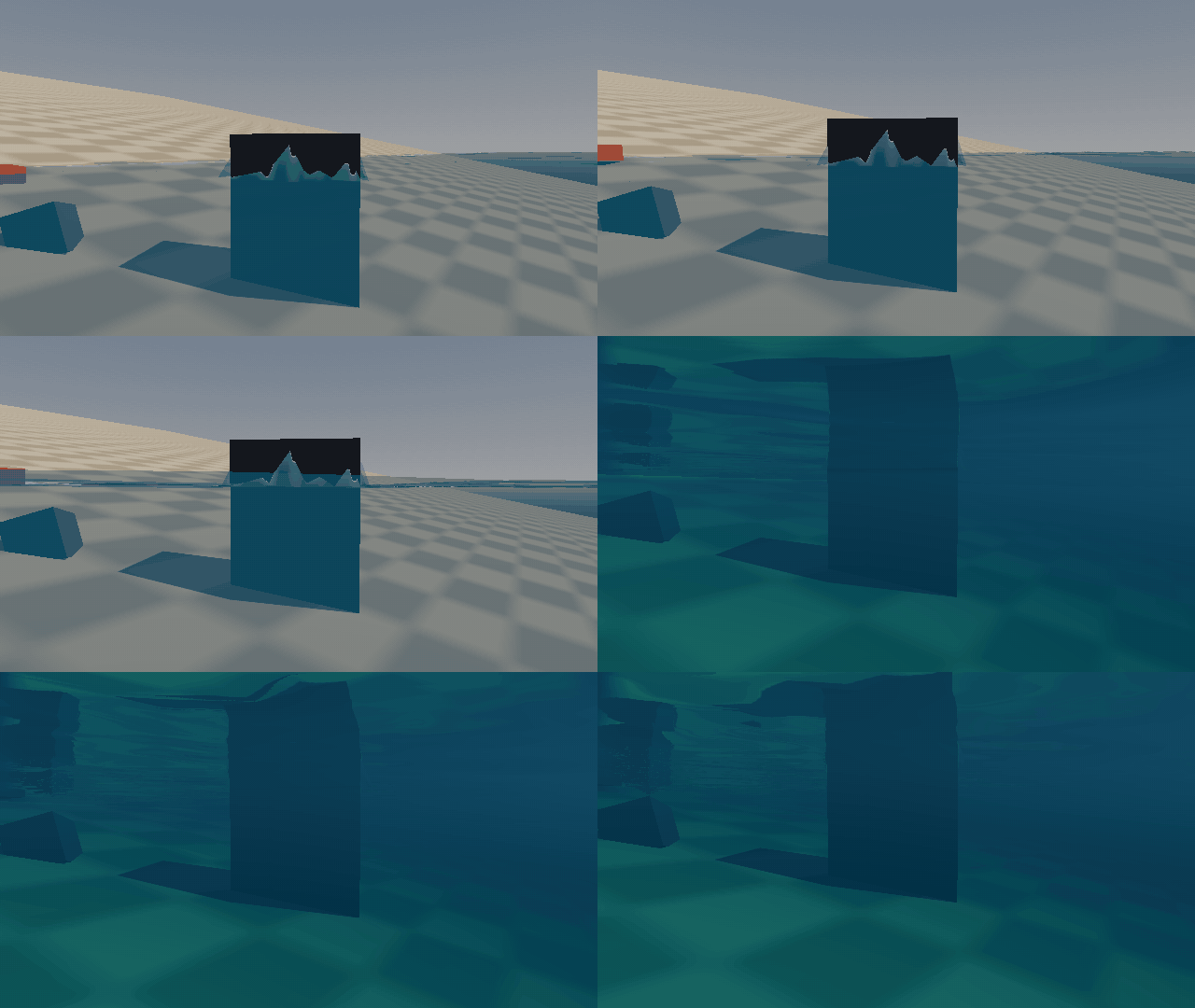
Under water: light scattering and the surface seen from below.